
What is the Effect of Pressure on Melting Point of a Substance?
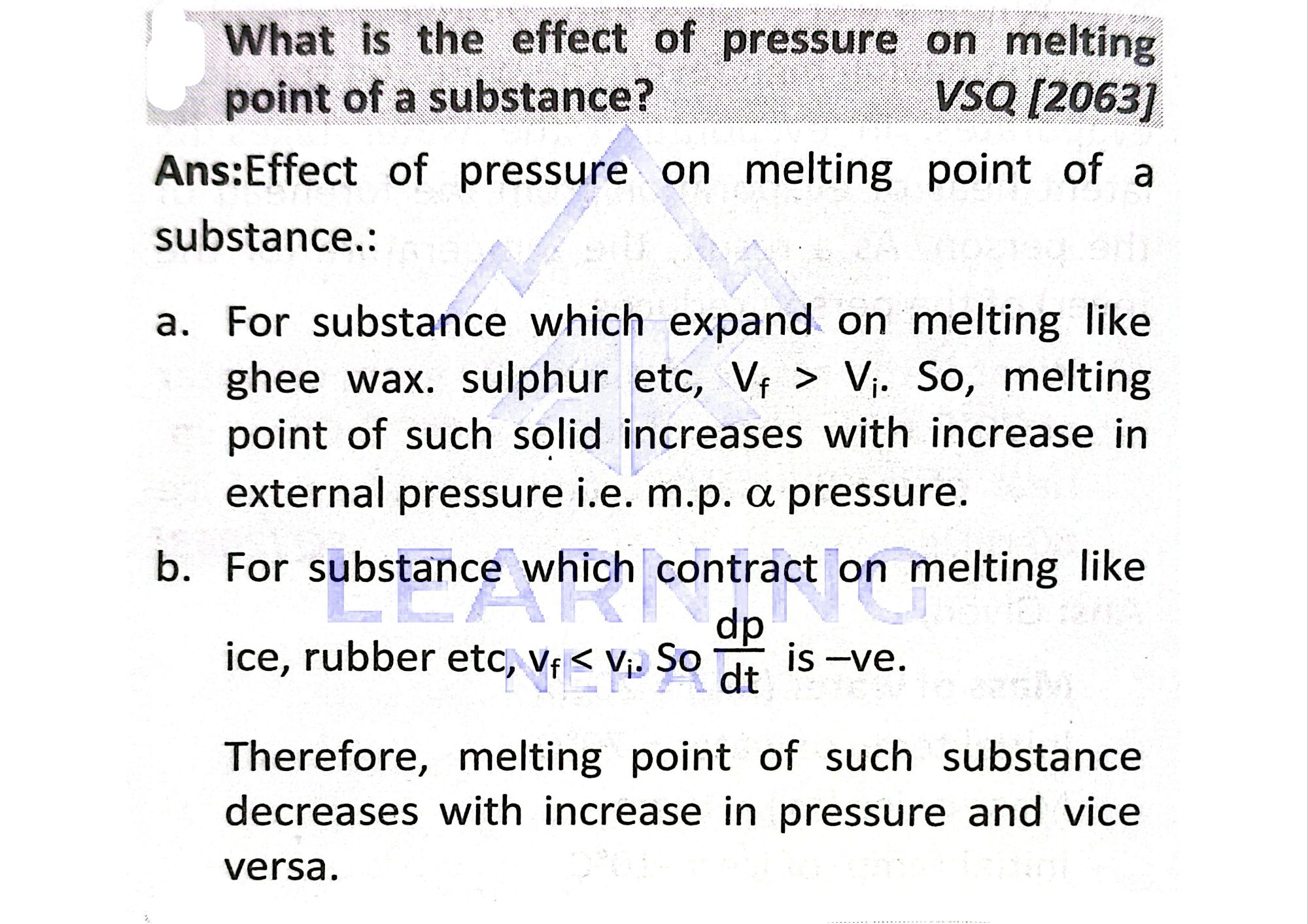

What is the effect of pressure on melting point of a substance — this topic explores how applying pressure can change the melting point of different substances, depending on their structure and volume change on melting.
General Principle
When a substance melts, its solid and liquid phases have different densities and volume. If melting involves increase in volume (liquid occupies more volume than solid), increasing external pressure raises the melting point; if melting involves decrease in volume (liquid occupies less volume than solid), increasing pressure lowers the melting point.
Examples and Special Case
- For most substances (solid → liquid increases volume), increased pressure raises melting point (e.g. many metals).
- In the case of water (ice → liquid water decreases volume), increasing pressure lowers melting point — ice melts more easily under high pressure.
Note: The effect of pressure on melting point depends on volume change upon melting. Always check whether solid → liquid volume increases or decreases before predicting shift in melting point.
Related: Internal link here
Read More About Pressure & Melting Point (DoFollow)
Keywords
effect of pressure on melting point, pressure melting point relation, melting point pressure chemistry, ice melting pressure, volume change melting, chemistry class 11, phase transitions, pressure and phase, melting point shift, solid to liquid transition, physical chemistry, phase equilibrium, pressure effect, melting point example, substance melting pressure
Tags
pressure effect, melting point, physical chemistry, phase transition, chemistry notes, class 11 chemistry, ice pressure, phase equilibrium, substance melting, high pressure chemistry, science education, chemistry tutorial, chemistry concept, melting point example, educational chemistry,What is the Effect of Pressure on Melting Point of a Substance?