
Basic Medical Procedure and First Aid

General Medicine (HA) – Second Year
Unit 9: Care of Dead Body
Importance of Respectful Post-Mortem Care
Care of the deceased is a fundamental aspect of healthcare that requires sensitivity, respect, and professionalism. This unit covers the systematic approach to confirming death, providing dignified care to the body, and supporting grieving families. Proper post-mortem care maintains the dignity of the deceased, prevents infection, and ensures compliance with legal and cultural requirements.
Healthcare professionals must balance technical procedures with compassion, respecting both medical protocols and the emotional needs of bereaved families. Follow the Basic Medical Procedures and First Aid Page for more resources.
1. Definition & Purpose
Definition: Care of dead body is the respectful and systematic care given to a body after death to maintain dignity, prevent infection, and prepare the body for identification, transportation, or last rites.
Purpose
- Maintain dignity of the deceased
- Prevent spread of infection
- Prepare body for family viewing
- Facilitate legal procedures
- Ensure proper identification
- Respect cultural/religious practices
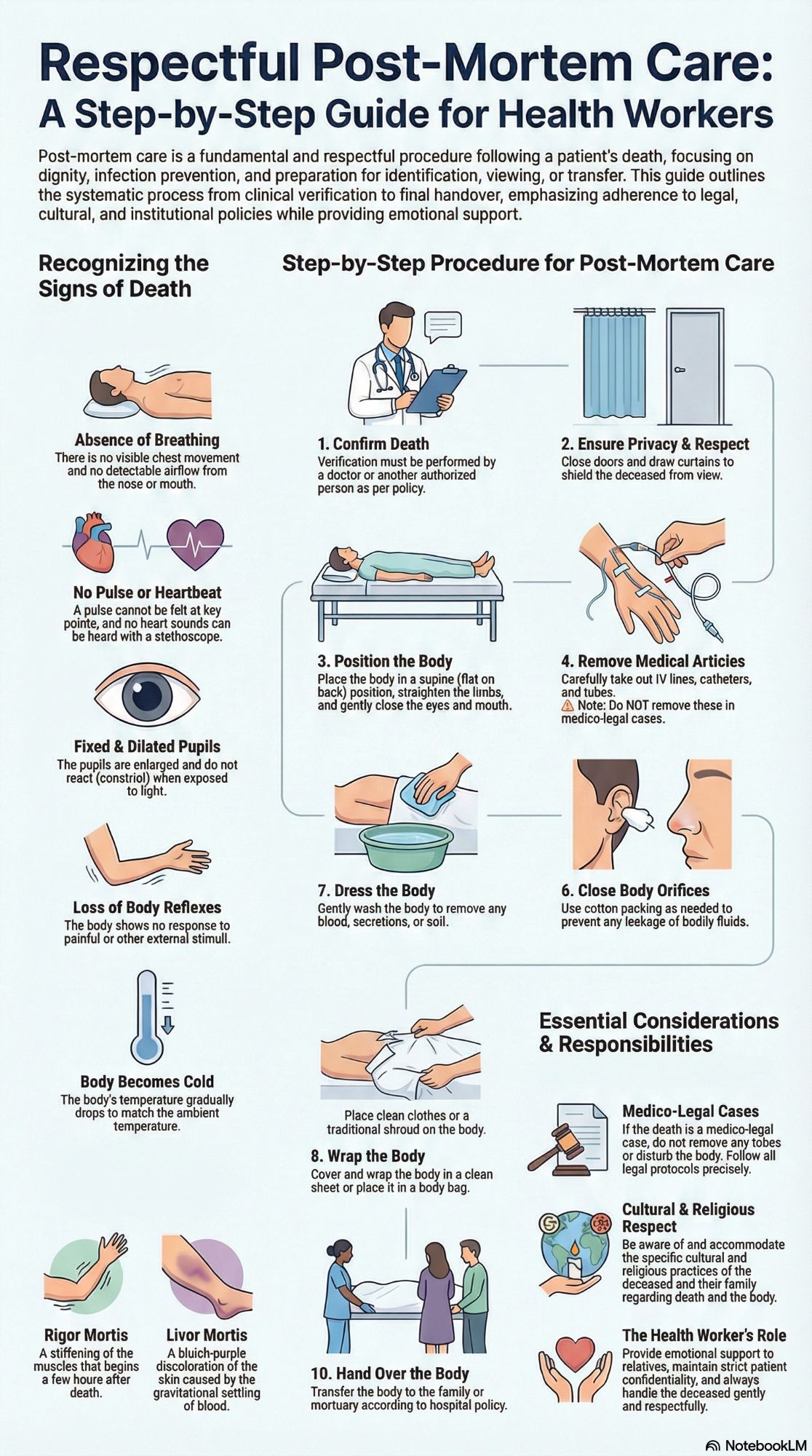
2. Signs of Death
| Sign | Description |
|---|---|
| Absence of breathing | No chest movement, no air flow from nose/mouth |
| No pulse/heartbeat | No pulse felt, no heart sounds on auscultation |
| Fixed, dilated pupils | Pupils do not react to light, remain dilated |
| Loss of reflexes | No response to pain or stimuli |
| Cold body temperature | Body gradually cools (algor mortis) |
| Rigor mortis | Stiffening of muscles (begins 2-6 hours after death) |
| Livor mortis | Bluish-purple discoloration due to blood settling |
| Pallor mortis | Paleness due to cessation of circulation |
⚠️ Important Note
Only a doctor or authorized medical professional should officially declare death. Healthcare workers assist with confirmation but do not make the formal declaration.
3. Care of the Body After Death
Systematic Procedure
By doctor or authorized person only
Close curtains/doors, maintain dignity
Supine, straighten limbs, close eyes/mouth
IV lines, catheters, tubes (if permitted)
Wash gently, clean blood/secretions
Use cotton to prevent leakage
Clean clothes or shroud
Tag with name, age, date, time
Clean sheet or body bag
To relatives or mortuary per policy
Closing Eyes & Mouth
- Gently close eyelids
- Support jaw with bandage if needed
- Place small pillow under head
- Keep facial expression natural
Body Cleaning
- Use warm water and mild soap
- Wear gloves and apron
- Clean from head to toe
- Pat dry thoroughly
Orifice Packing
- Use clean cotton/gauze
- Pack rectum and vagina
- May pack mouth if needed
- Secure with tape if necessary
Special Considerations
Medico-Legal Cases
- Do NOT remove tubes, catheters, or evidence
- Do NOT clean the body unless instructed
- Do NOT change position unnecessarily
- Preserve all medical equipment in situ
- Notify authorities immediately
- Document everything meticulously
Cultural & Religious Practices
- Respect specific positioning requirements
- Allow family to perform rituals when possible
- Understand different mourning customs
- Coordinate with religious leaders if needed
- Be sensitive to modesty requirements
Role of Health Worker
Professional Responsibilities
- Provide emotional support to grieving relatives
- Maintain confidentiality at all times
- Handle body gently and respectfully
- Follow infection control protocols
- Ensure proper documentation
- Coordinate with other departments
Communication Skills
- Use clear, compassionate language
- Allow time for questions
- Respect cultural expressions of grief
- Provide information about next steps
- Offer practical assistance
- Know when to involve counselors

Documentation & Safety Protocols
Essential Documentation
- Death certificate (completed by physician)
- Time of death and notification of relatives
- Personal belongings inventory
- Identification tags (minimum two: wrist and ankle)
- Body release form (signed by authorized person)
- Medico-legal case documentation if applicable
- Property checklist with witness signatures
Infection Control & Safety
- Standard precautions: Gloves, gown, face protection
- Hand hygiene before and after procedure
- Proper disposal of contaminated materials
- Surface disinfection of bed/equipment
- Special precautions for infectious diseases
- Body bag use for highly infectious cases
- Transport safety to prevent leakage
Identification Tag Requirements
- Full name of deceased
- Age/Date of birth
- Hospital registration number
- Date and time of death
- Physician’s name
- Ward/Unit
- One on wrist (right or left)
- One on ankle (opposite side)
- Secure but not too tight
- Water-resistant material
- Legible handwriting or printed
- Check before releasing body
📚 Memory Aids & Key Points
Signs of Death Mnemonic
Breathing absent
Eyes fixed and dilated
Apneic (no respiration)
Temperature dropping
Heart stopped
Plus: Rigor mortis, Livor mortis
Procedure Sequence
Privacy first
Remove medical devices (if allowed)
Eyes and mouth closed
Position properly
Attend to cleanliness
Respectful dressing
Ensure identification
Health Worker’s Role
- Compassionate care
- Observe protocols
- Maintain dignity
- Follow procedures
- Offer support
- Respect customs
- Timely documentation
🩺 Clinical Tips & Best Practices
Family Support
- Allow family time with deceased if desired
- Provide a private, quiet space
- Offer tissues, water, seating
- Explain procedures gently
- Provide information about next steps
- Respect cultural mourning practices
Self-Care for Staff
- Debrief after difficult cases
- Recognize signs of compassion fatigue
- Utilize counseling services if needed
- Maintain professional boundaries
- Practice stress-reduction techniques
- Support colleagues in challenging situations
Special Situations
- Organ donation: Coordinate with transplant team
- Infection control: Extra precautions for contagious diseases
- Traumatic death: Additional psychological support needed
- Unclaimed bodies: Follow institutional protocols
- Multiple deaths: Mass casualty protocols apply
Topic Tags
Post-Mortem Care
Signs of Death
Rigor Mortis
Livor Mortis
Body Preparation
Last Offices
Death Certification
Medico-Legal Cases
Bereavement Care
Infection Control
Body Identification
Cultural Sensitivity
Healthcare Ethics
End-of-Life Care
Professionalism
Documentation
Clinical Procedures
Healthcare Protocols
📋 Summary & Key Points
- Respect and dignity are paramount in all post-mortem care
- Only doctors officially declare death; healthcare workers assist with confirmation
- Standard procedure includes positioning, cleaning, dressing, and identification
- Medico-legal cases require preservation of evidence – do not remove tubes or clean unless instructed
- Infection control is essential for protection of healthcare workers and others
- Cultural and religious practices must be respected and accommodated when possible
- Documentation must be accurate, complete, and timely
- Family support includes emotional care, clear communication, and practical assistance
- Professional self-care is important when dealing with death regularly
- Legal compliance is mandatory for death certification and body release
For more resources, contact via WhatsApp: 9816819593 or visit CTEVT Nepal