
Difference Between Conduction and Convection and Radiation
Difference Between ConductionConvection and Radiation

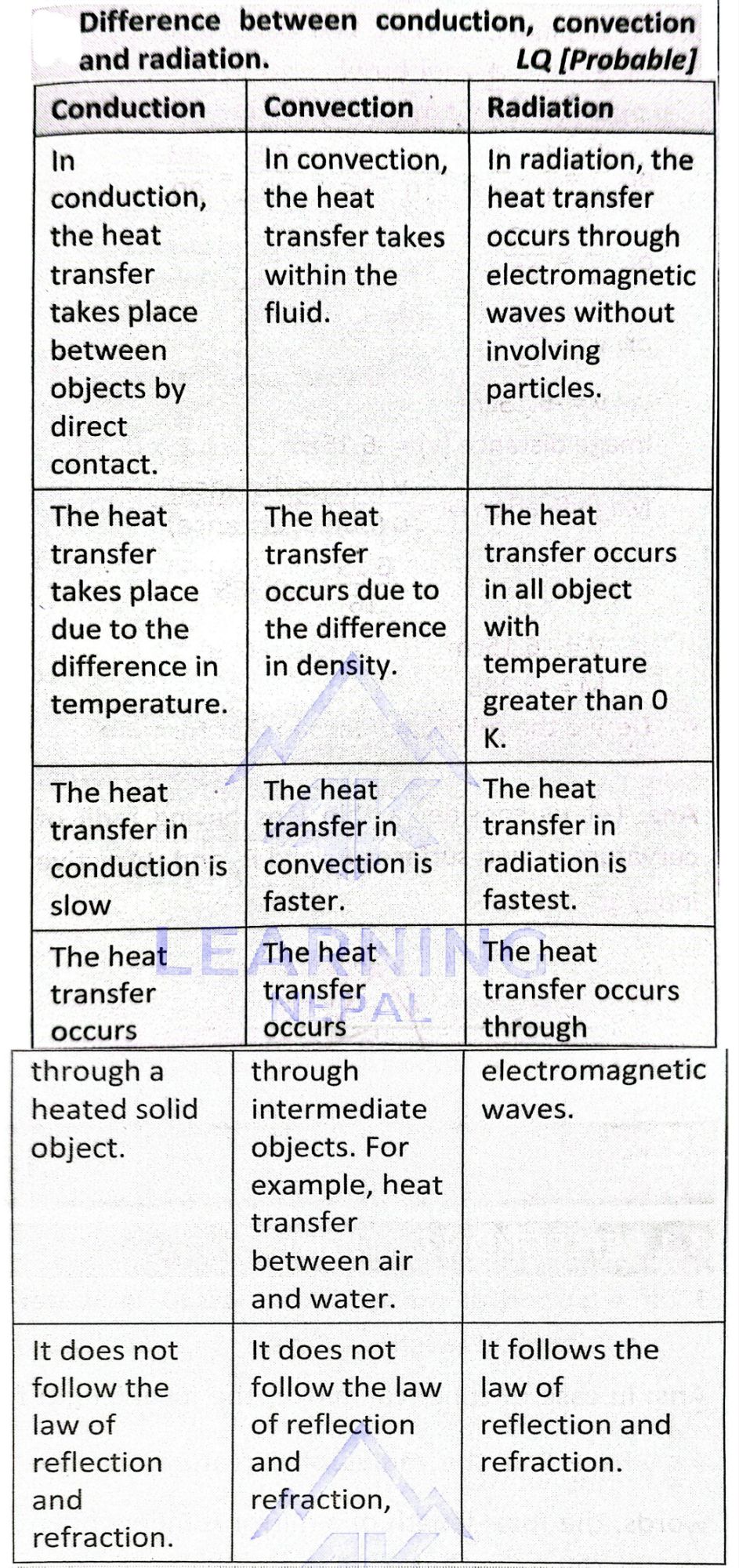
Difference Between Conduction, Convection and Radiation — these are the three fundamental methods of heat transfer, each operating via different mechanisms and under different conditions.
What is Conduction?
Conduction is the transfer of heat through a material without the movement of the material as a whole. Heat flows from high-temperature region to low-temperature region within solids or between solids in contact. For example, heating one end of a metal rod will warm the other end gradually.
What is Convection?
Convection is heat transfer by the bulk movement of fluid (liquid or gas). When part of the fluid heats up, it becomes less dense and rises, while cooler fluid sinks — forming convective currents. Example: boiling water in a pot.
What is Radiation?
Radiation is the transfer of heat via electromagnetic waves (infrared), without any medium. Heat can travel through vacuum. Example: heat from the Sun reaches Earth by radiation.
Comparison: Conduction vs Convection vs Radiation
| Conduction | Convection | Radiation |
|---|---|---|
| Heat transfer through direct contact and material conduction (solid, or between solids). | Heat transfer via movement of fluid (liquid or gas) masses (currents). | Heat transfer via electromagnetic waves; no medium needed, can occur through vacuum. |
| Requires temperature gradient and physical contact. | Requires fluid, temperature gradient, and ability for fluid to move. | No contact or medium required; only temperature difference/emission. |
| Common in solids and between solids/liquids in contact. | Common in liquids and gases. | Works through vacuum and transparent media too. |
| Rate depends on thermal conductivity. | Rate depends on fluid density, temperature difference and flow conditions. | Rate depends on emission, surface area and temperature difference. |
Difference Between ConductionConvection and Radiation
Read More About Heat Transfer Modes (DoFollow)