
Basic Medical Procedure and First Aid

General Medicine (HA) – Second Year
Unit 7: Hot and Cold Application
Importance of Therapeutic Temperature Applications
Hot and cold applications are fundamental nursing interventions that provide non-pharmacological pain relief, reduce inflammation, promote healing, and manage various medical conditions. Understanding the physiological effects, appropriate techniques, and safety precautions is essential for effective patient care. This unit covers the principles, methods, and clinical applications of both heat and cold therapies, including specialized procedures like sitz baths.
Mastering these skills allows healthcare providers to enhance patient comfort, accelerate recovery, and prevent complications. Follow the Basic Medical Procedures and First Aid Page for more resources.
1. Definitions
Hot Application
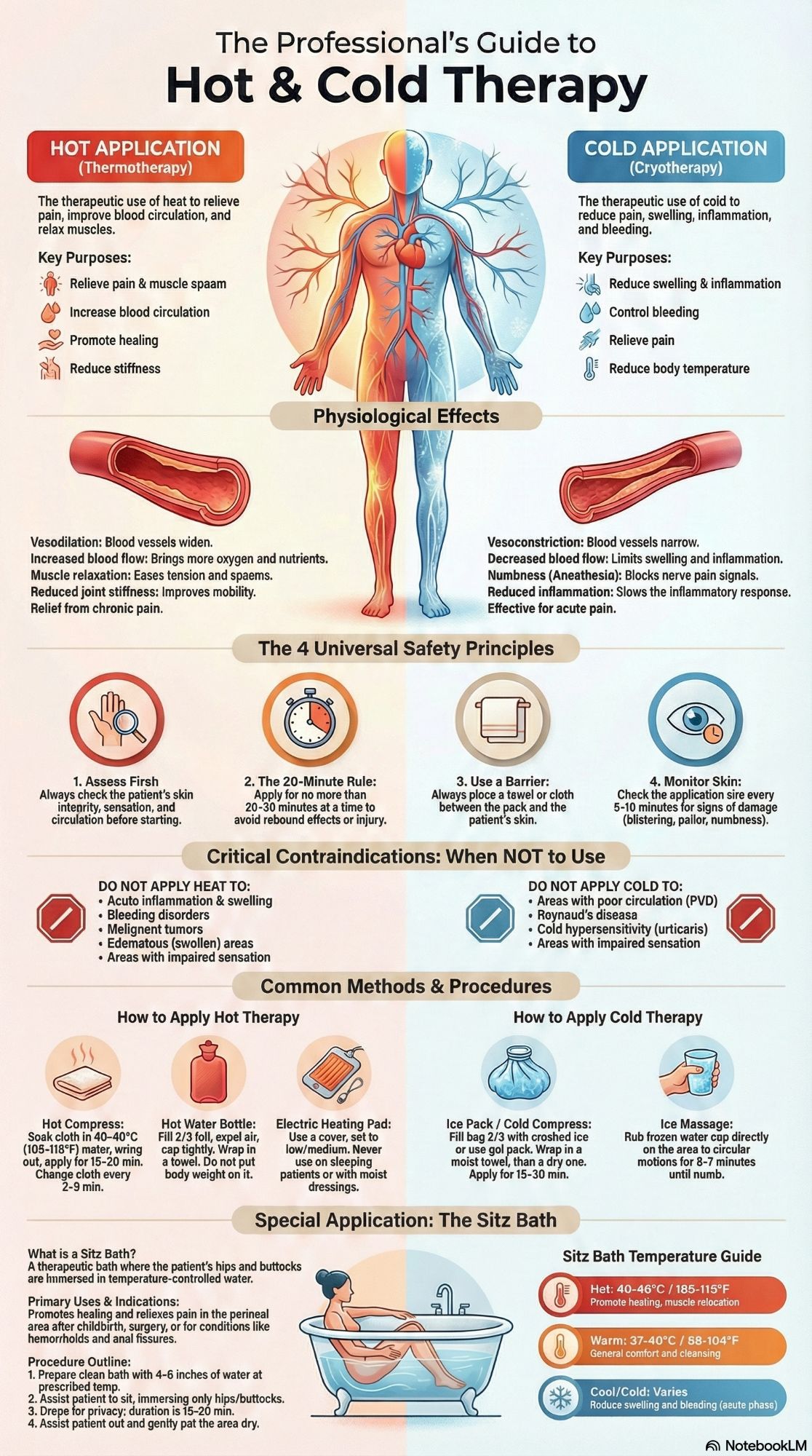
Therapeutic use of heat to relieve pain, improve circulation, and relax muscles.
Cold Application
Therapeutic use of cold to reduce pain, swelling, inflammation, and bleeding.
2. Purposes
Hot Application Purposes
- Relieve pain and muscle spasm
- Increase blood circulation
- Promote healing
- Reduce stiffness
- Softens exudates
Cold Application Purposes
- Reduce swelling and inflammation
- Control bleeding (vasoconstriction)
- Relieve pain (analgesia)
- Reduce body temperature (fever)
- Decrease metabolic rate
3. Key Principles & Safety Rules
- Assessment First: Check skin integrity, sensation, and circulation
- 20-Minute Rule: Never exceed 20-30 minutes continuous application
- Proper Insulation: Always use barrier (towel/cloth) between source and skin
- Check Frequently: Monitor skin every 5-10 minutes for adverse reactions
- Contraindications Awareness: Know when NOT to apply heat or cold
- Patient Education: Instruct on proper home care and warning signs
4. Physiological Effects
| Effects of Hot Application | Effects of Cold Application |
|---|---|
| Vasodilation (blood vessels widen) | Vasoconstriction (blood vessels narrow) |
| Increased blood flow | Decreased blood flow |
| Muscle relaxation | Reduced swelling (edema) |
| Reduced joint stiffness | Numbness (analgesia) |
| Relief from chronic pain | Reduced inflammation |
| Increased tissue elasticity | Decreased metabolic rate |
5. Types and Methods
A. Hot Application Methods
Hot compress, sitz bath, soak
Hot water bottle, heating pad
Hot Compress Procedure
- Soak gauze in hot water (40-46°C / 105-115°F)
- Wring out excess water
- Apply over area with dry towel barrier
- Change every 2-3 minutes
- Duration: 15-20 minutes
Hot Water Bottle Safety
- Fill only 2/3 with hot water
- Expel air completely before sealing
- Wrap in towel cover before application
- Never place body weight on it
- Check skin every 5-10 minutes

B. Cold Application Methods
Cold compress, ice massage
Ice pack, gel pack
Ice Pack Procedure
- Crush ice, fill bag 2/3, expel air
- Wrap in moist towel then dry towel
- Apply to affected area
- Duration: 15-20 minutes maximum
- Allow 1-2 hours between applications
Ice Massage Technique
- Freeze water in paper/foam cup
- Tear away top rim to expose ice
- Rub in circular motions over painful area
- Continue for 5-7 minutes until numb
- Pat dry, do not rub skin
6. Important Contraindications
Heat Application Contraindications
- Acute inflammation (first 24-48 hours)
- Bleeding disorders or active hemorrhage
- Malignant tumors in the area
- Impaired sensation (neuropathy)
- Edematous areas
- Open wounds or skin infections
- Recent radiation therapy site
Cold Application Contraindications
- Raynaud’s disease or phenomenon
- Peripheral vascular disease
- Cold hypersensitivity (urticaria)
- Impaired sensation
- Open wounds in some cases
- Hypothermia or severe shivering
- Cryoglobulinemia
7. Sitz Bath
Definition: A therapeutic bath in which the hips and buttocks are immersed in warm or cold water.
Types & Temperatures
- Hot Sitz Bath: 40-46°C (105-115°F) – Healing, muscle relaxation
- Warm Sitz Bath: 37-40°C (98-104°F) – Comfort and cleansing
- Cool/Cold Sitz Bath: Below 37°C – Reduce swelling, bleeding (acute phase)
Indications
- Hemorrhoids (piles)
- Perineal pain and inflammation
- Post-partum care
- Anal fissures
- Post-hemorrhoidectomy
- Perineal episiotomy care
- Pelvic inflammatory disease
Sitz Bath Procedure
Clean sitz bath tub, fill with 4-6 inches of water at prescribed temperature
Add antiseptic (Betadine) or salt as per medical order if needed
Assist patient to sit, immerse hips and buttocks, feet supported outside tub
Drape for privacy and warmth, maintain comfortable position
15-20 minutes, monitor patient throughout
Pat dry gently, apply prescribed ointment/dressing, ensure rest
Precautions for All Applications
- Check temperature with thermometer
- Maintain privacy and dignity
- Avoid prolonged application (max 20-30 mins)
- Observe for dizziness or weakness
- Monitor skin condition frequently
- Use proper equipment and technique
- Document procedure and patient response
- Educate patient on home care if applicable
⚠️ Danger Signs
Stop immediately if:
• Severe pain
• Blistering or burns
• Extreme redness
• Numbness or tingling
• Dizziness or fainting
📚 Memory Aids & Clinical Pearls
Temperature Guidelines
Hot Applications: 40-46°C (105-115°F)
Warm Applications: 37-40°C (98-104°F)
Tepid Sponging: 27-37°C (80-98°F)
Cold Applications: Below 15°C (59°F)
“Too hot to touch = too hot to use”
Timing Rules
Acute Injuries: Cold first 24-48 hours
Chronic Conditions: Heat for stiffness
Application Duration: 15-20 minutes max
Interval: 1-2 hours between applications
“20 on, 40 off” for cold therapy
Contraindication Mnemonics
No HEAT for:
H – Hemorrhage
E – Edema (acute)
A – Anesthesia areas
T – Tumors (malignant)
No COLD for:
C – Cold hypersensitivity
O – Open wounds (some)
L – Lack of sensation
D – Diminished circulation
🩺 Clinical Tips & Best Practices
Assessment Tips
- Always assess sensation before application
- Check peripheral pulses in affected area
- Note skin color, temperature, and integrity
- Ask about metal implants (conduct heat/cold)
- Consider patient’s age and medical conditions
Patient Education
- Teach proper home application techniques
- Explain expected sensations
- Warn about danger signs to report
- Provide written instructions
- Demonstrate equipment use if needed
Special Populations
- Elderly: Thinner skin, monitor closely
- Diabetics: Check for neuropathy
- Children: Use lower temperatures
- Unconscious patients: Extreme caution needed
- Pregnancy: Avoid abdominal heat
Topic Tags
Cold Application
Thermotherapy
Cryotherapy
Sitz Bath
Heat Therapy
Cold Therapy
Pain Management
Inflammation Control
Vasodilation
Vasoconstriction
Hot Compress
Ice Pack
Perineal Care
Hemorrhoid Care
Postpartum Care
Clinical Procedures
Therapeutic Techniques
First Aid Skills
📋 Summary & Key Points
- Heat Applications: Use for chronic conditions, muscle relaxation, stiffness relief (vasodilation)
- Cold Applications: Use for acute injuries, swelling reduction, pain control (vasoconstriction)
- 20-Minute Rule: Never exceed 20-30 minutes continuous application
- Safety First: Always use barrier, check skin integrity and sensation
- Sitz Bath: Specialized perineal treatment for hemorrhoids, postpartum care, inflammation
- Contraindications: Know when NOT to apply heat or cold based on patient conditions
- Documentation: Record temperature, duration, site, patient response, any adverse effects
- Patient Education: Essential for safe home application and recognizing complications
For more resources, contact via WhatsApp: 9816819593 or visit CTEVT Nepal