

Basic Medical Procedure and First Aid
General Medicine (HA) – Second Year
Unit 3: Infection Prevention
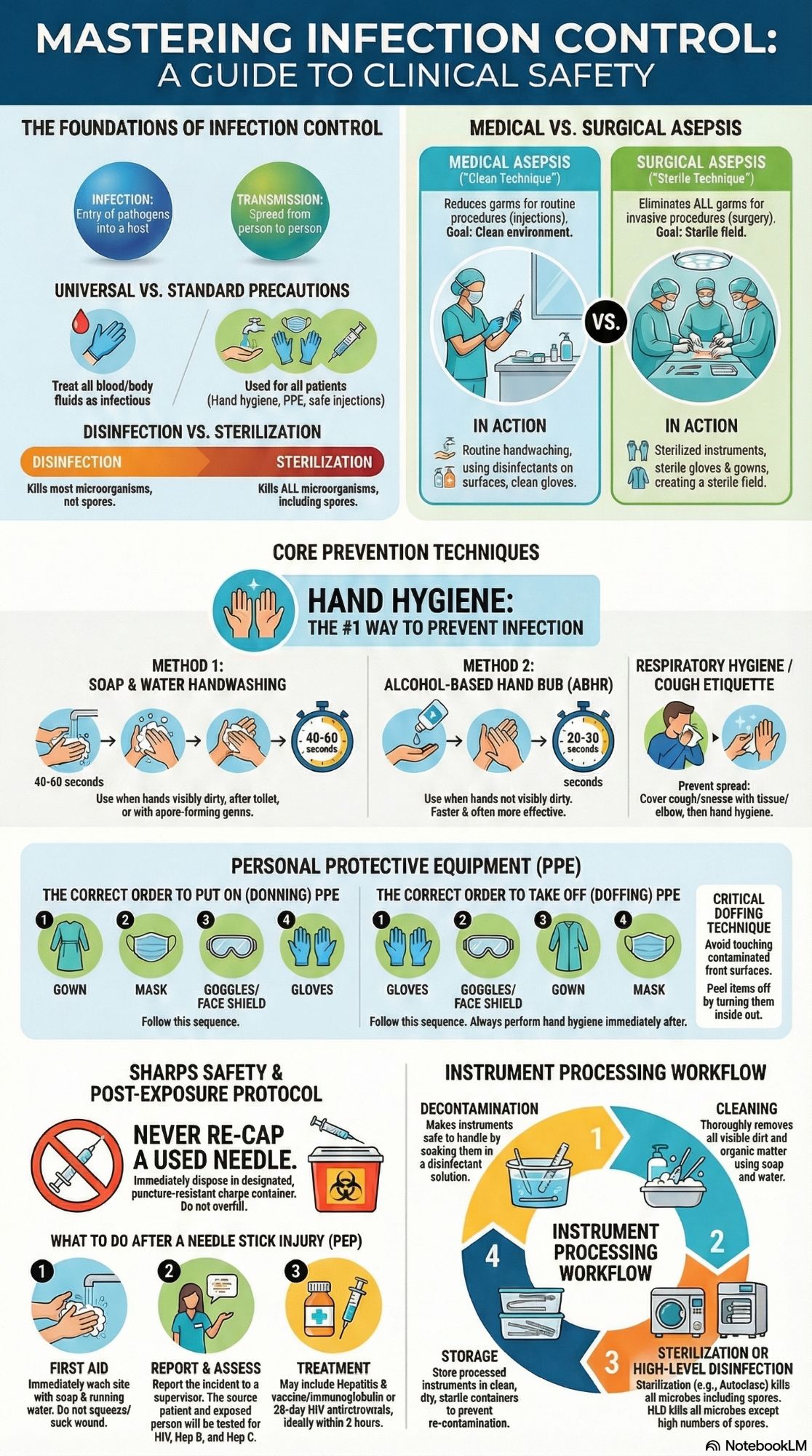
Importance of Infection Prevention
Infection prevention is the cornerstone of safe healthcare delivery. Healthcare-associated infections (HAIs) affect millions of patients worldwide each year, leading to prolonged hospital stays, increased healthcare costs, and significant mortality. This unit covers critical protocols and practices that protect both patients and healthcare workers from infectious diseases.
Mastering these principles is essential for all healthcare professionals to break the chain of infection transmission. Follow the Basic Medical Procedures and First Aid Page for more resources.
1. Terminology of Infection Prevention
Entry and multiplication of harmful microorganisms in the body.
Disease-causing microorganism.
A person who can get infection.
Process of killing all microorganisms including spores.
Prevention of infection by reducing microorganisms.
Process of killing most microorganisms (not spores).
2. Universal & Standard Precautions
Universal Precautions
Safety measures to prevent transmission by treating all blood and body fluids as infectious.
Standard Precautions
Infection control practices used for all patients, regardless of diagnosis.
- Hand hygiene
- Use of PPE
- Safe injection practices
- Respiratory hygiene
3. Medical vs Surgical Asepsis
| Medical Asepsis (Clean Technique) | Surgical Asepsis (Sterile Technique) |
|---|---|
| Goal: Reduce number and spread of germs | Goal: Eliminate ALL germs from an area |
| Used in: Daily care (injections, wound dressing) | Used in: Surgeries, catheter insertion |
| Examples: • Handwashing • Using disinfectants • Wearing clean gloves |
Examples: • Sterilizing instruments • Using sterile gloves/gowns • Creating sterile field |
Clean Environment Requirements
- Regular cleaning of floor, bed, table
- Proper waste disposal
- Adequate ventilation
- Proper linen management
4. Respiratory Hygiene / Cough Etiquette
Measures to prevent spread of respiratory infections:
Always perform hand hygiene after coughing/sneezing!

5. Hand Hygiene Techniques
⚠️ CRITICAL: The SINGLE MOST IMPORTANT way to prevent infection
A. Medical Handwashing
Duration: 40-60 seconds
When to use: Hands visibly dirty, after toilet, after C. difficile exposure
- Wet hands
- Apply soap
- Rub all surfaces
- Rinse thoroughly
- Dry with single-use towel
C. Alcohol-Based Hand Rub
Duration: 20-30 seconds
When to use: Hands not visibly dirty (most situations)
- Apply palmful of rub
- Rub over all surfaces
- Continue until dry
Faster and more effective against most germs
B. Surgical Hand Scrub (Before surgery)
Duration: 2-5 minutes
Thorough scrub of hands and forearms using surgical scrub agent and sterile brush/nail pick.
6. Personal Protective Equipment (PPE)
🔄 DONNING (Putting On)
- Gown
- Mask
- Goggles/Face Shield
- Gloves
🔄 DOFFING (Taking Off)
- Gloves
- Goggles/Face Shield
- Gown
- Mask
→ Then perform hand hygiene immediately
Procedure for Gloving
- Pick up glove by cuff (folded edge)
- Slide hand in without touching outside
- Use gloved hand to put on second glove
- Pinch outside of one glove near wrist
- Peel off, turning inside out
- Hold removed glove in gloved hand
- Slide bare fingers inside cuff, peel off second glove
7. Safe Needle Management & PEP
Safe Needle Management:
- NEVER re-cap a used needle
- Use safety-engineered sharps
- Dispose immediately in puncture-resistant container
- Do not overfill sharps containers
Post-Exposure Prophylaxis (PEP):
If needle prick injury happens:
- First Aid: Wash with soap and running water
- Report: Immediately to supervisor
- Assessment: Test for Hep B, Hep C, HIV
- Treatment: Start appropriate PEP within 2 hours
8. Safe Injection Practices & Instrument Processing
Safe Injection Practices:
- Use sterile syringe and needle
- Follow aseptic technique
- Clean injection site with antiseptic
- Never reuse syringe or needle
- Do not touch needle or site after cleaning
Instrument Processing Steps:
- Decontamination – Makes items safe to handle
- Cleaning – Removes dirt and organic matter
- Sterilization – Destroys all microorganisms
- High Level Disinfection – Kills all except spores
- Storage – In clean, dry area
📚 Memory Aids & Key Points
PPE Sequence Mnemonic
DONNING: Gown → Mask → Goggles → Gloves
“GMGG – Good Morning, Good Gloves”
DOFFING: Gloves → Goggles → Gown → Mask → Hand hygiene
“GGGMH – Gloves Go, Gown Goes, Mask, Hands”
Hand Hygiene Timing
Medical handwash: 40-60 seconds
Alcohol-based rub: 20-30 seconds
Surgical scrub: 2-5 minutes
“40 clean, 30 quick, 5 for surgery”
Critical Rules
- Never recap used needles
- PEP within 2 hours of exposure
- All body fluids are potentially infectious
- Standard precautions for ALL patients
Topic Tags
Universal Precautions
Standard Precautions
Medical Asepsis
Surgical Asepsis
Hand Hygiene
PPE
Respiratory Hygiene
Cough Etiquette
Sterilization
Disinfection
Safe Injection
Needle Safety
PEP
Post-Exposure Prophylaxis
Gloving Technique
Gowning Technique
Infection Control
Healthcare Safety
Pathogen Control
📋 Summary & Key Points
- Hand hygiene is the single most important infection prevention measure
- Apply standard precautions to ALL patients
- Differentiate between medical asepsis (clean) and surgical asepsis (sterile)
- Follow correct PPE sequence for donning and doffing
- Practice safe needle management – never recap used needles
- Initiate PEP within 2 hours of exposure to blood/body fluids
- Maintain respiratory hygiene to prevent droplet transmission
- Follow proper instrument processing steps
For more resources, contact via WhatsApp: 9816819593 or visit CTEVT Nepal