
Health Assistant (HA) Surgery I
Unit 1: Introduction to Surgery
CTEVT Second Year Health Science (PCL) – According to Latest Syllabus

📚 Importance of This Unit
This foundational unit provides essential knowledge about surgical principles, techniques, and ethical considerations crucial for Health Assistants. Mastering these concepts prepares you for assisting in surgical procedures, patient care, and emergency situations in clinical settings.
Source: Official CTEVT Syllabus for Health Assistant (HA) Second Year – CTEVT Official Website
1. Laparoscopic vs Open Surgery
🔍 Quick Comparison
| Aspect | Laparoscopic | Open Surgery |
|---|---|---|
| Incision Size | Small (0.5-1.5cm) | Large (5-20cm) |
| Pain Level | Minimal | Significant |
| Recovery Time | 1-2 weeks | 4-8 weeks |
| Infection Risk | Low | Higher |
✅ Laparoscopic Surgery
Meaning: Minimally invasive surgery using small incisions and a camera (laparoscope)
Common Indications:
- Cholecystectomy (gall bladder removal)
- Appendectomy
- Diagnostic laparoscopy
- Hernia repair
🩺 Open Surgery
Meaning: Traditional surgery with a single large incision
Common Indications:
- Major trauma cases
- Cancer surgeries
- Emergency surgeries
- Complex reconstructions
2. Diathermy (Electrosurgery)
⚡ Principle & Applications
Principle: Uses high-frequency alternating electric current (500kHz-4MHz) to generate heat in biological tissues
Two Main Effects:
- Cutting: Vaporizes tissue with focused current
- Coagulation: Seals blood vessels by denaturing proteins
Safety Concerns:
- Risk of burns at electrode site
- Tissue damage if misused
- Fire hazard with flammable agents
- Interference with pacemakers
3. Surgical Ethics
⚠️ Key Ethical Principles
Medical ethics guide all surgical practice and decision-making
🤝 Autonomy & Informed Consent
Autonomy: Patient’s right to make decisions about their own body and treatment
Informed Consent: Must include:
- Nature of procedure
- Risks and benefits
- Alternative options
- Written documentation
🔒 Confidentiality
Patient information must remain private and secure. Exceptions only in specific legal situations.

🔬 Research Ethics
Clinical research must follow:
- Institutional Review Board approval
- Voluntary participation
- Risk minimization
- Beneficence and justice
4. Surgical Nutrition
🍎 Nutritional Requirements
Vitamins
- Vitamin A: Wound healing
- Vitamin C: Collagen synthesis
- Vitamin K: Blood clotting
- B Complex: Energy metabolism
Minerals
- Zinc: Immune function
- Iron: Oxygen transport
- Calcium: Bone health
- Magnesium: Enzyme function
Enteral vs Parenteral Nutrition
Enteral (Tube Feeding)
Route: GI tract (NG tube, PEG tube)
Complications:
- Aspiration pneumonia
- Diarrhea
- Tube dislodgement
- Infection at site
Parenteral (IV Feeding)
Route: Intravenous (central or peripheral)
Complications:
- Line sepsis
- Electrolyte imbalance
- Liver dysfunction
- Metabolic disorders
5. Disaster Management
Definition: Organized response to mass casualty incidents involving coordination of resources and personnel
🚨 Sequence of Relief Efforts:
- Establish Command: Incident command system
- Damage Assessment: Rapid evaluation of needs
- Resource Mobilization: Equipment and personnel
- Rescue Operations: Life-saving interventions
- Coordination: Multi-agency collaboration
- Helper Safety: Protect rescue workers
- Triage: Priority-based treatment
🎯 Triage Categories
- 🔴 Immediate: Life-threatening, treat now
- 🟡 Delayed: Serious but can wait
- 🟢 Minimal: Minor injuries
- ⚫ Expectant: Unlikely to survive
6. Transplantation Basics
❤️ Key Concepts
Transplantation: Transfer of living tissue/organ from donor to recipient
Organ Donation: Voluntary gift of organs after death or from living donor
🫀 Commonly Transplanted Organs
- Kidney: Most common transplant
- Liver: Partial or whole organ
- Heart: End-stage heart failure
- Cornea: Restores vision
- Lungs: For respiratory failure
- Pancreas: For type 1 diabetes
📋 Donation Types
Living Donor: Kidney, liver lobe, bone marrow
Deceased Donor: Heart, lungs, pancreas, corneas
Requirements: Blood type matching, tissue typing, consent
💡 Clinical Tips & Important Notes
For HA Students:
- Always verify patient identity before any procedure
- Maintain sterile technique in surgical areas
- Document everything accurately and timely
- Know emergency protocols for your facility
Memory Aids:
- ABCDE of disaster triage
- 4 D’s of medical ethics: Duty, Dereliction, Direct cause, Damages
- “ENT” for Enteral Nutrition: Enteral = Natural route
Exam Focus:
- Comparison tables often asked
- Know indications for each surgery type
- Ethical scenarios common in exams
- Nutrition calculations important
🧠 Quick Knowledge Check
Question 1: Which surgical approach typically has faster recovery time?
Question 2: What is the primary principle of surgical diathermy?
📥 Download Complete Notes
Get printable PDF version of these notes for offline study
Includes all topics, diagrams, and summary sheets
📄 One-Page Revision Summary
Surgery Types
Laparoscopic: Minimal access, camera-guided, quick recovery
Open Surgery: Direct access, large incision, traditional approach
Key Equipment
Diathermy: Electrical cutting/coagulation device
Laparoscope: Camera for minimally invasive surgery
Ethical Must-Knows
• Informed consent mandatory
• Confidentiality essential
• Autonomy respected
🏷️ Study Tags
Laparoscopic Surgery
Open Surgery
Surgical Diathermy
Medical Ethics
Informed Consent
Enteral Nutrition
Parenteral Nutrition
Surgical Vitamins
Disaster Management
Triage System
Organ Transplantation
Health Assistant
PCL Nursing
Surgical Complications
Wound Healing
Sterile Technique
Patient Safety
Second Year HA
© CTEVT Health Assistant (HA) Second Year Surgery I Notes | Unit 1: Introduction to Surgery
These notes are based on the official CTEVT syllabus. Always refer to your primary textbooks and instructors for complete information. HA Surgery I Unit 1 Introduction to Surgery Notes
CTEVT Official |
Next Unit → |
Previous Unit
For educational purposes only. Not a substitute for professional medical advice.
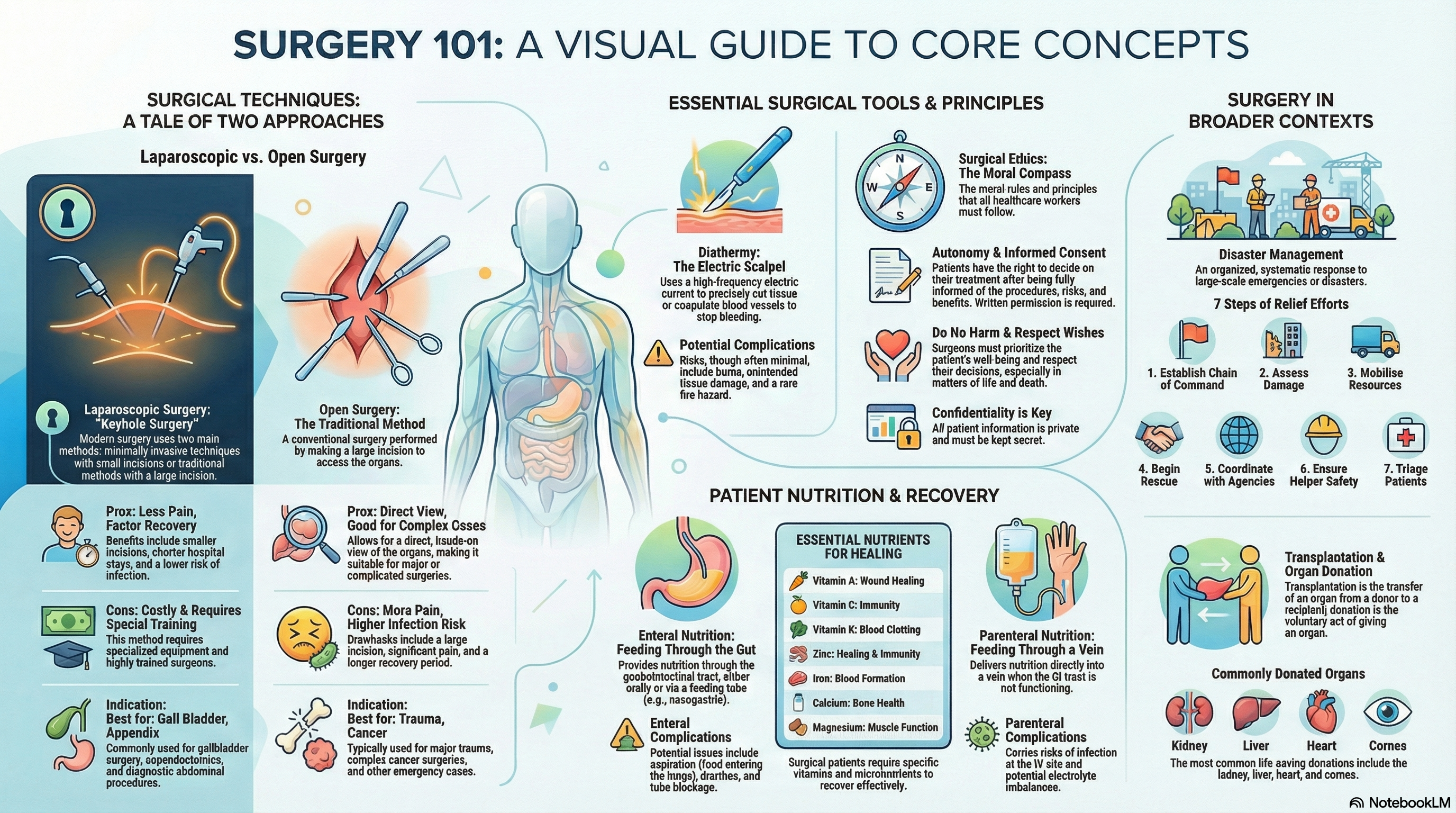
Essential surgical instruments and equipment that Health Assistants must be familiar with
HA Second Year – Surgery I
Complete Unit Wise Notes
Past Year Questions
Important Questions